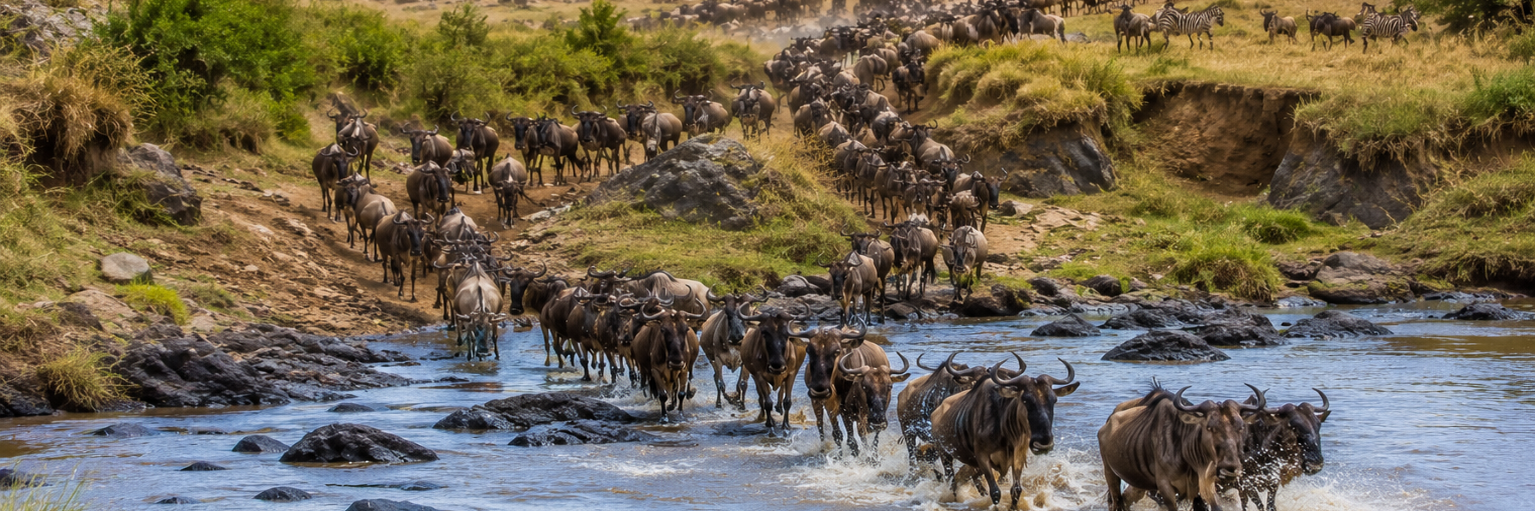
The Great Wildebeest Migration: Why You Can Experience It All Year Round
The Great Wildebeest Migration: Why You Can Experience It All Year Round When people think of the Great Wildebeest Migration, they often picture thousands of wildebeest plunging into the crocodile-filled Mara River in one dramatic crossing. While these iconic scenes are certainly spectacular, many travellers don't realise that the Great Migration isn't a single event—it's a continuous, year-round journey. Every month, more than two million wildebeest, accompanied by hundreds of thousands of zebra and gazelle, move across the vast ecosystems of Tanzania's Serengeti National Park and Kenya's Maasai Mara in search of fresh grazing. The migration never truly stops; it simply changes location throughout the year. The secret to planning the perfect migration safari isn't choosing one specific month—it's knowing which chapter of this incredible story you want to experience.
The Great Migration: A Never-Ending Circle
Rather than following a fixed schedule, the migration is guided by rainfall and the growth of fresh grass. While exact timings vary slightly each year, the journey generally follows this pattern:
- January – March: Southern Serengeti & Ndutu (Calving Season)
- April – June: Central & Western Serengeti
- July – October: Northern Serengeti & Kenya's Maasai Mara
- November – December: Eastern Serengeti as the herds return south
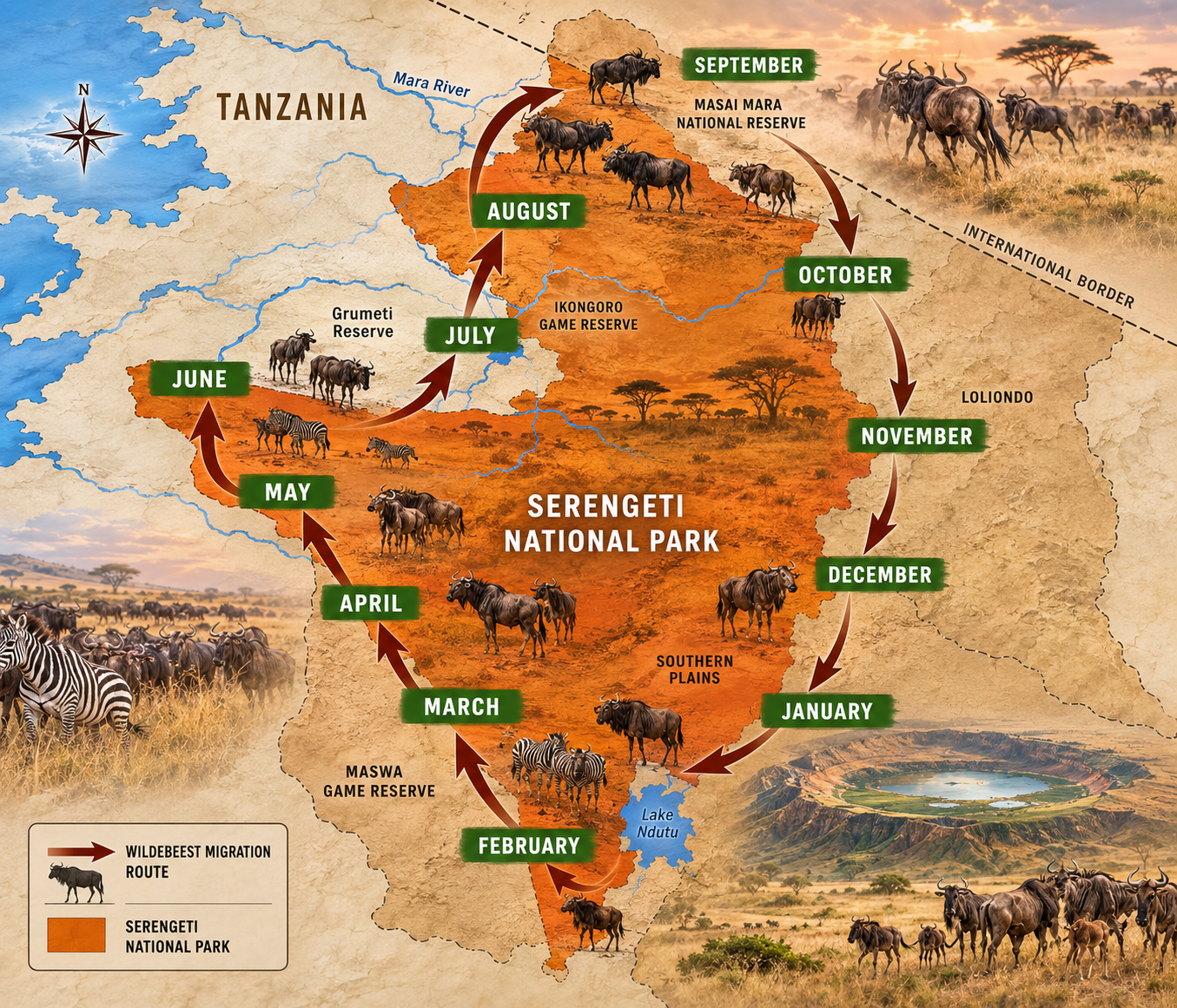
Let's take a closer look at what makes each season so special.
Calving Season in the Southern Serengeti
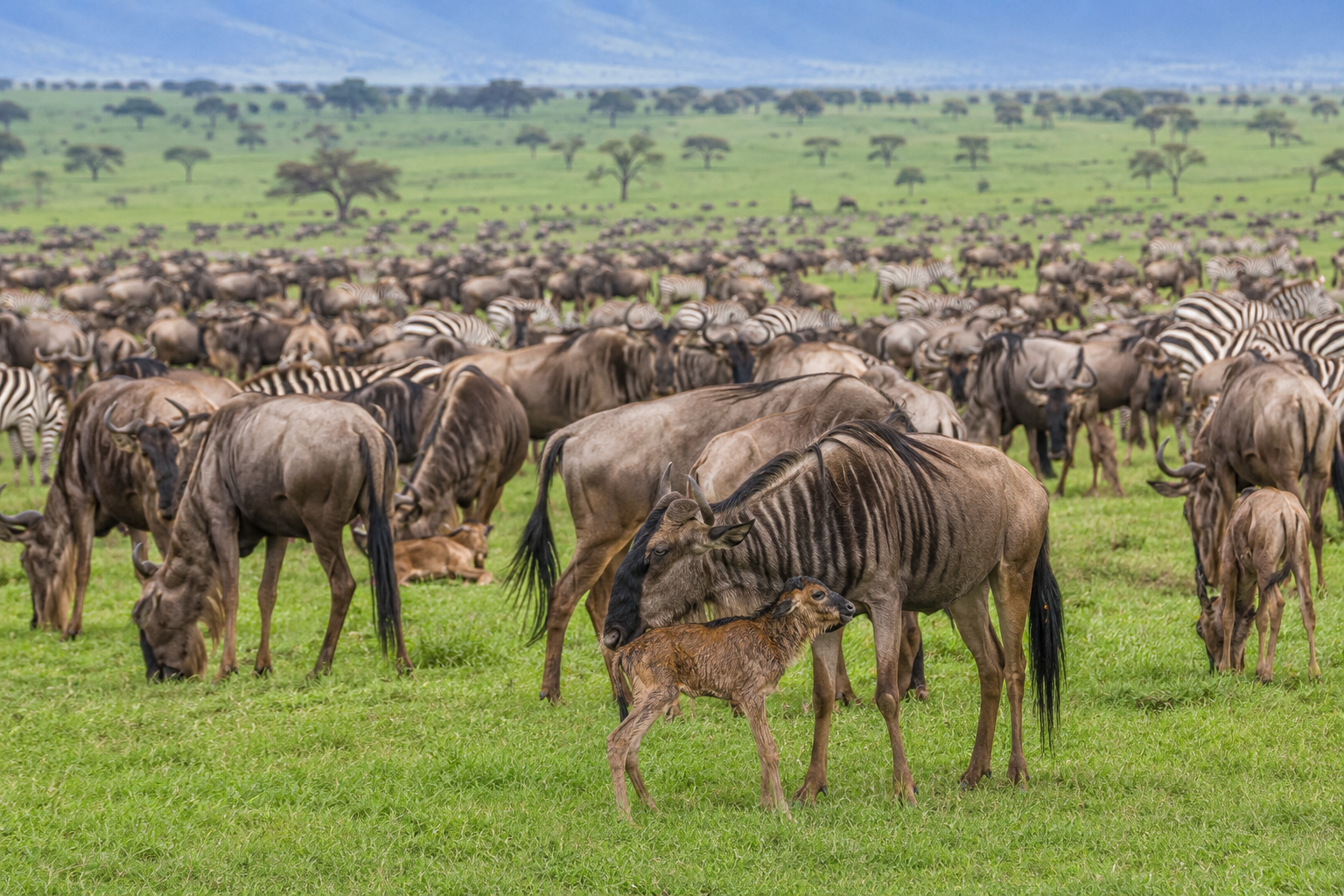
January to March – Calving Season in the Southern Serengeti
The year begins on the nutrient-rich short-grass plains of the Southern Serengeti, Ndutu and the Ngorongoro Conservation Area.
January-Fresh rains transform the plains into a sea of green, attracting enormous herds that stretch to the horizon.
February -This is the peak of the calving season, with up to 8,000 calves born every day during the busiest weeks.
Watching newborn wildebeest take their very first steps just minutes after birth is an unforgettable experience. Naturally, predators such as lions, cheetahs and hyenas are never far away, creating some of Africa's most dramatic wildlife encounters.
March-The herds remain in the south, where lush grazing continues to support the young calves. It's a wonderful time for photography, with abundant wildlife, vibrant landscapes and excellent predator sightings.
Perfect for:
- Families
- Wildlife photographers
- Predator action
- Baby animals
- Beautiful green landscapes
The Long Journey North
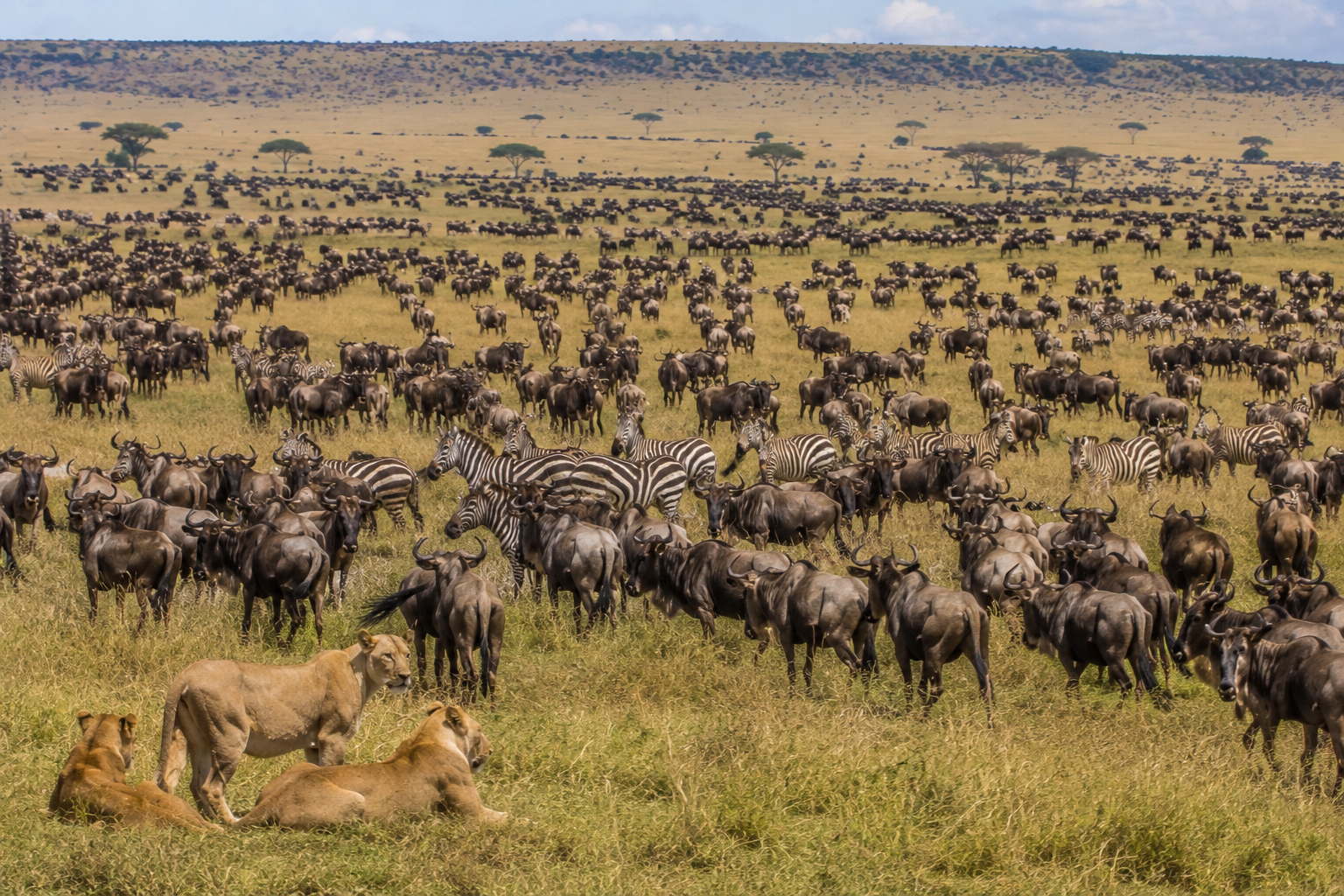
April to June – The Long Journey North
As the rains begin to move, so do the herds.
April-The migration slowly heads north through the Central Serengeti, often passing the famous Moru Kopjes. Endless lines of wildebeest weave through acacia trees and rocky outcrops.
May-The animals continue towards the Western Corridor. Visitor numbers are generally lower, making this an excellent time to enjoy spectacular wildlife without the peak-season crowds.
June-Massive herds gather along the Grumeti River. There's a real sense of anticipation as thousands of animals hesitate along the riverbanks before making their first dangerous crossings.
Perfect for:
- Watching the migration on the move
- Large herd sightings
- Fewer crowds
- Great value safaris
The Famous River Crossings
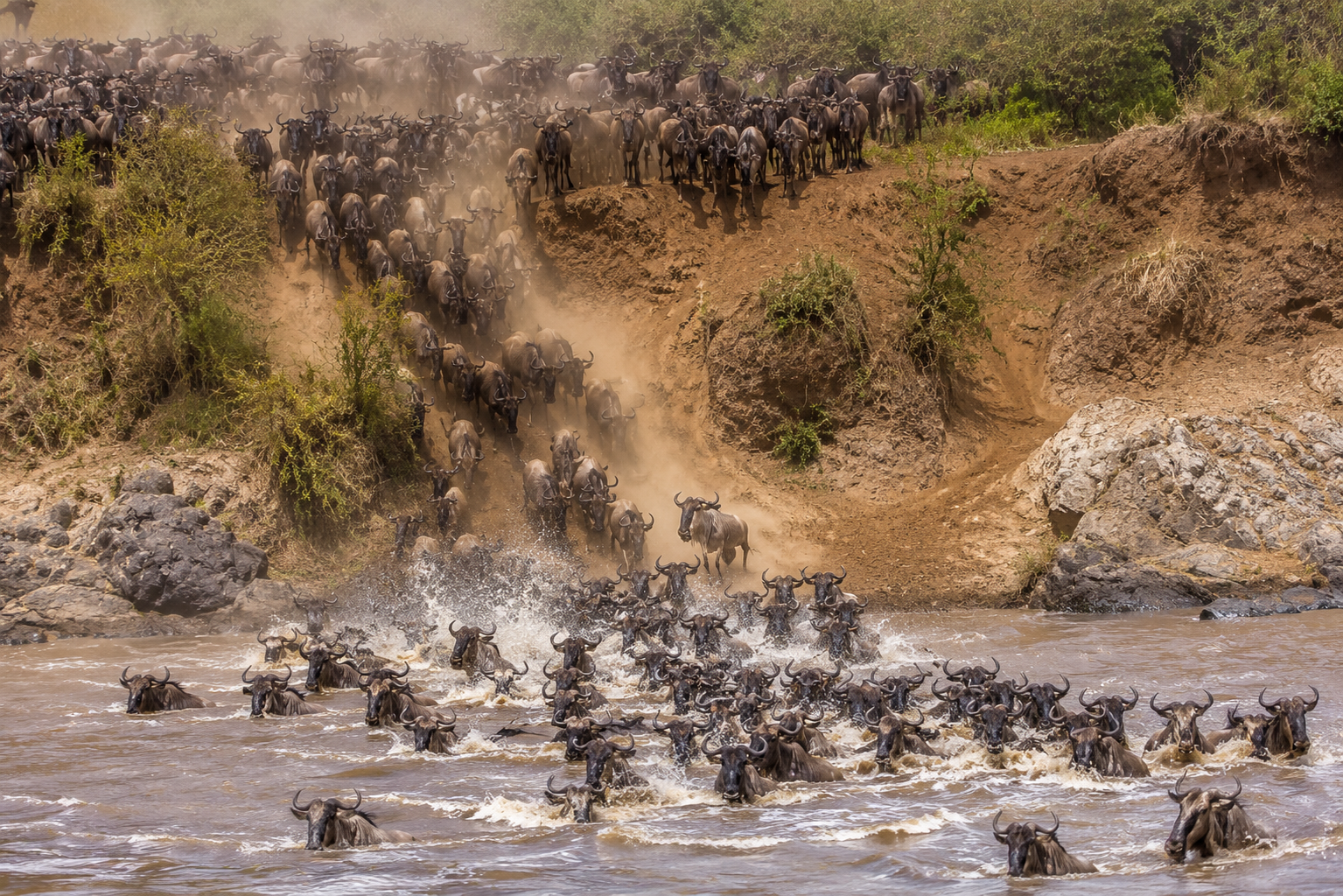
July to October – The Famous River Crossings
This is the chapter most people dream about.
July-The first dramatic river crossings begin as the herds reach the Northern Serengeti.
Animals often gather for hours—sometimes even days—before suddenly charging into the river together.
August & September-These months usually offer the best opportunities to witness the legendary Mara River crossings.Towering riverbanks, powerful currents, enormous crocodiles and thousands of wildebeest create one of the greatest wildlife spectacles on Earth.
Every crossing is different, making each safari unique.
October-As conditions change, the herds gradually begin moving away from the Mara and prepare for the long journey back south.
Perfect for:
- River crossings
- Bucket-list safaris
- Incredible photography
- Classic African wildlife experiences
November to December – The Journey Home
With the arrival of the short rains in the south, the migration begins its return.
November-The herds travel through the Eastern Serengeti and the remote Lobo and Loliondo regions. These areas receive fewer visitors, offering a quieter and more exclusive safari experience.
December-The animals arrive back on the Southern Serengeti plains, where fresh grazing awaits. Within weeks, the cycle begins again as calving season approaches.
Perfect for:
- Quiet safari camps
- Wide open landscapes
- Dramatic summer skies
- Excellent value
So... When Is the Best Time to See the Great Migration?
The truth is there isn't a single "best" time.
Instead, the best time depends on the experience you're hoping to have.
|
Time of Year |
Best Experience |
|
January – March |
Calving season, newborn wildlife and predators |
|
April – June |
Huge migrating herds and fewer tourists |
|
July – October |
Iconic Mara River crossings |
|
November – December |
Peaceful safaris and the migration returning south |
Because the migration follows rainfall rather than a strict calendar, its exact location changes slightly from year to year. Choosing the right lodge or camp is just as important as choosing the right travel dates.
Let Me Help You Plan the Perfect Migration Safari
Whether your dream is witnessing the thrilling Mara River crossings, photographing newborn calves on the Southern Serengeti plains, or escaping to quieter areas away from the crowds, I can help you plan a safari that matches your interests and budget.
Together we can:
- Choose the best time of year for the wildlife experiences you want.
- Select lodges and camps that place you in the heart of the migration.
- Add unforgettable experiences such as hot-air balloon safaris, private game drives or a relaxing beach holiday in Zanzibar after your safari.
The Great Wildebeest Migration is one of the world's most extraordinary natural spectacles—and no matter when you travel, there's always an incredible chapter waiting to unfold.
Ready to experience it for yourself?
Get in touch today, and let's start planning an unforgettable African safari designed just for you.